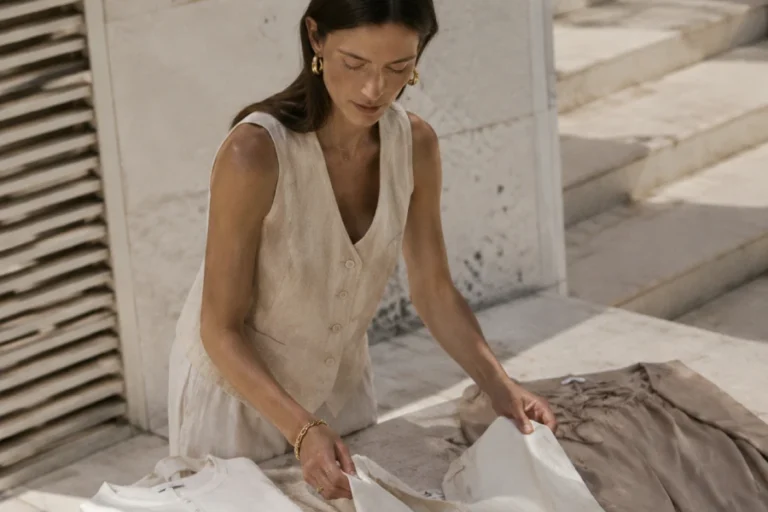
Breathable Summer Fabrics can change the way a wardrobe feels during the hottest months. Summer style often fails because clothes are chosen by appearance first. A top may look airy but trap heat. A dress may seem effortless but cling in humidity. A trouser may feel crisp indoors and stiff outside. The wrong fabric makes even simple outfits uncomfortable. A smarter approach begins with how the material performs. Then color, shape, and styling can follow. When fabric works with the weather, the whole outfit feels calmer. Heat becomes easier to dress for.
Why Breathable Summer Fabrics Should Lead Every Outfit
Fabric affects comfort before silhouette does. Heat, moisture, airflow, opacity, and texture all shape the final experience. A practical summer fabric strategy helps you choose materials for real conditions. Linen, cotton, gauze, chambray, poplin, and breathable blends can all serve different purposes. Some breathe beautifully but wrinkle fast. Others hold polish but feel warmer. Breathable Summer Fabrics are not one category with one answer. They need matching to climate, activity, and outfit purpose. The right fabric makes the rest of styling easier.
Understanding Heat, Humidity, and Fabric Behavior
Dry heat and humid heat create different wardrobe problems. Dry heat may tolerate crisp fabrics better. Humidity often reveals cling, transparency, and poor airflow quickly. A strong heat friendly clothing plan considers how fabric behaves after several hours, not only when freshly steamed. Lightweight fabric can still feel uncomfortable if it sticks to the skin. Structured fabric can still work if it allows air. Your wardrobe should learn from full-day wear. Summer comfort depends on performance, not just labels.
Breathable Summer Fabrics With Enough Structure
Breathability alone can make outfits look underdone. Very soft fabrics may collapse, wrinkle heavily, or lose their shape. A useful fabric first summer style method adds structure through weave, cut, proportion, or accessories. Breathable Summer Fabrics look stronger when the outfit has a clear line. A cotton shirt can sharpen a linen trouser. A woven sandal can ground a gauze dress. A defined bag can finish a soft set. Style does not require heavy clothing. It requires enough visual architecture to support ease.
Solving the Sheer Fabric Problem
Sheerness is one of summer’s most common surprises. Pale cotton, linen, gauze, and lightweight blends can look opaque indoors and reveal more outside. The solution is not always a heavy layer. Choose breathable underlayers that stay smooth and discreet. Test garments in daylight before wearing them. A breathable underlayers plan protects comfort and confidence together. Underpieces should support the outfit without changing its mood. When hidden layers are planned, light summer fabrics become easier to wear.
Breathable Summer Fabrics Through Color and Texture
Texture adds interest without adding heat. A slub weave, ribbed knit, crisp poplin, washed linen, or fine stripe can make simple outfits feel intentional. A cotton summer wardrobe can feel plain or polished depending on texture and proportion. Breathable Summer Fabrics also change how colors read. Cream may look soft in linen and sharper in poplin. Black may feel heavy in dense fabric and elegant in a light weave. Texture in summer outfits keeps minimal dressing from becoming flat. Material choice becomes part of the design.
Building a Repeat List From Breathable Summer Fabrics
The best summer wardrobe learns from experience. Note which pieces feel comfortable after walking, sitting, and washing. Track what wrinkles acceptably and what looks tired too quickly. Save successful linen outfit planning formulas and humidity proof outfits. Breathable Summer Fabrics become easier to buy when you know your winners. You stop assuming that every light fabric will perform. You begin choosing from evidence. A personal repeat list makes warm-weather dressing cooler, smarter, and more reliable each season.